
For years, vehicle identification systems were built around a simple assumption:
The license plate identifies the vehicle.
That assumption worked—until it didn’t.
As parking, mobility, access control, and enforcement systems evolved toward ticketless, gateless, and fully automated operations, the role of the license plate changed fundamentally. It is no longer a convenience or a fallback identifier; it has become the primary transaction key, directly linked to revenue, access rights, compliance, and customer experience.
And once the license plate becomes mission-critical, its limitations become impossible to ignore.
In recent years, the physical ticket played a critical, often underestimated role: It was not just a means of access, but the primary identifier that guaranteed continuity across the entire parking session by linking entry and exit, securing billing, and ensuring revenue integrity.
License plate recognition always existed alongside it, but the system ultimately relied on the ticket to validate transactions and resolve uncertainty.
When a license plate was misread, partially captured, or not captured at all, the ticket remained the authoritative reference. In practice, it absorbed identification failures and masked the fragility of a plate-only approach.
However, paper tickets are no longer acceptable.
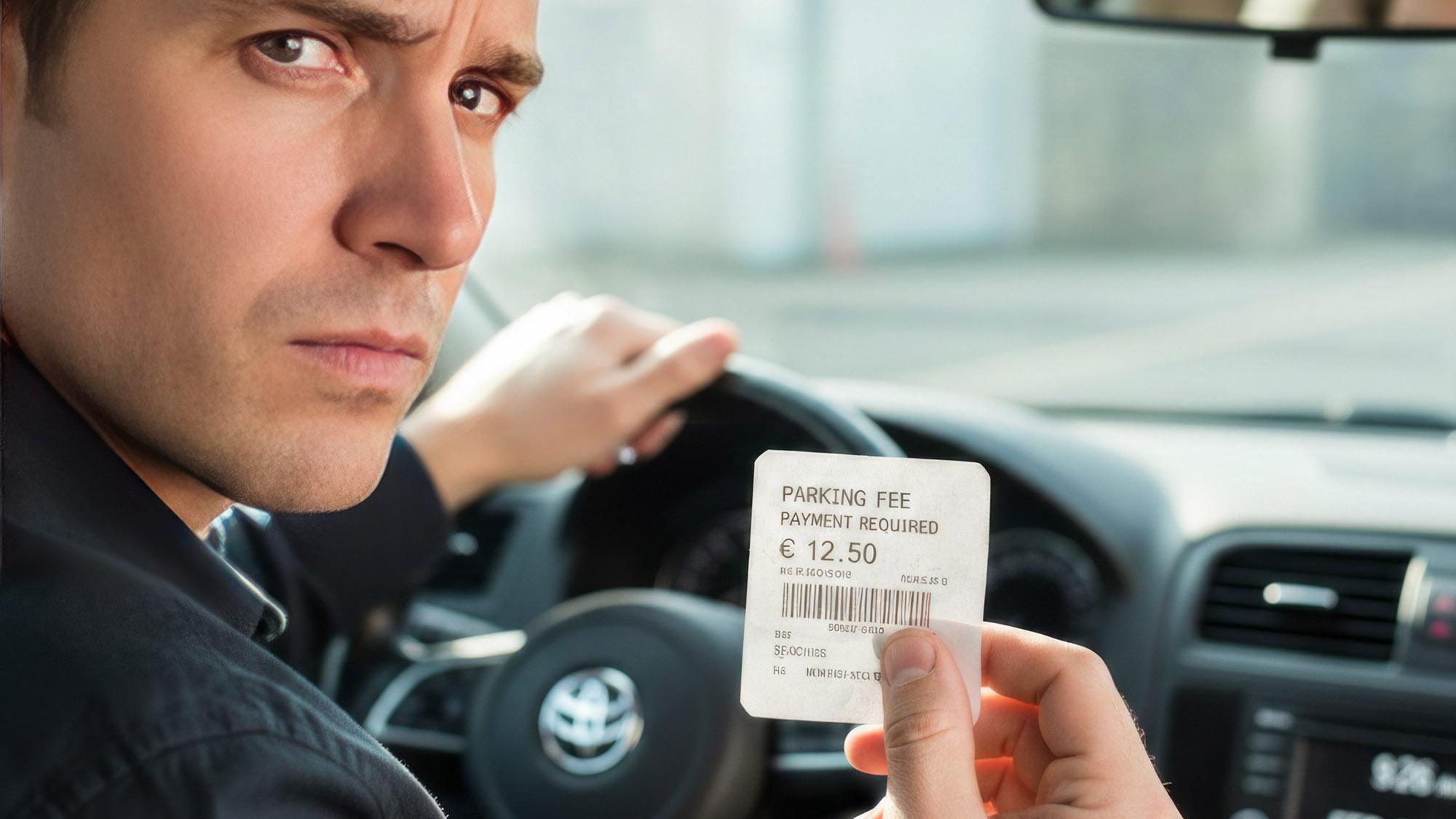
Customer expectations have changed. Modern users (especially younger generations) do not want to take, keep track of, insert, or queue because of a ticket. The only thing they want in their hands is their phone.
Customer experience has therefore pushed the industry toward ticketless, and increasingly gateless, operations. And once the ticket disappears, so does the safety net.
There is no longer a physical backup to compensate for uncertainty. The system must, with high confidence, know that the same vehicle entered and exited every time.
As a result, the baseline for what we consider “standard” performance has shifted. The market no longer expects a single identifier that sometimes works. It expects such a level of digital precision that requires more data, more computing power, more integration, and more business intelligence.
Operators are no longer looking for “one key to open one gate.” They are looking for situational awareness.
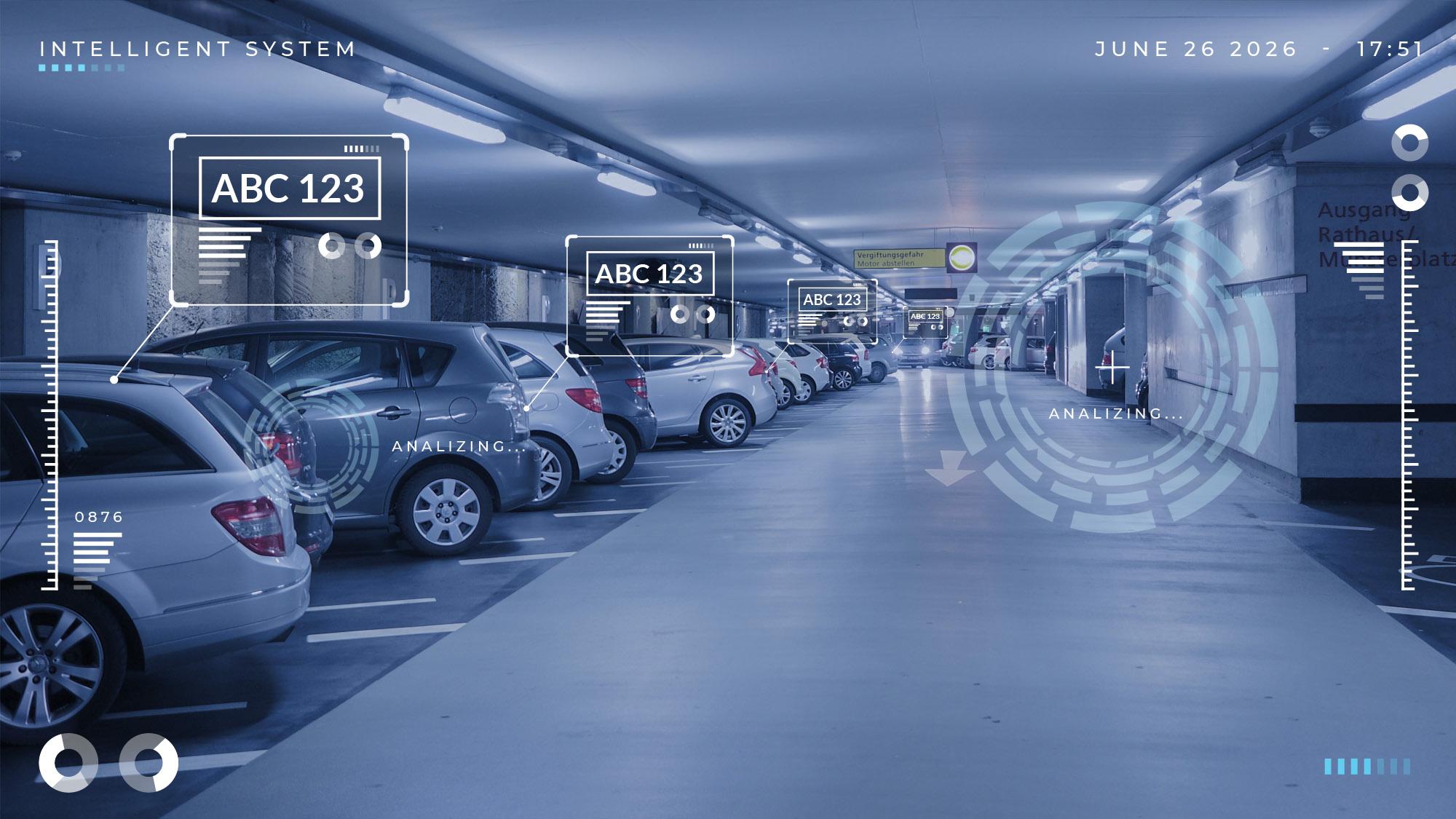
Just as the smartphone replaced the watch, the camera, and the music player, by integrating multiple capabilities into a single, intelligent interface, vehicle identification technology is undergoing a similar transformation.
This is not a hardware issue. Cameras already capture the necessary pixels. The transformation happens at a higher level: in how information is processed, integrated, and interpreted.
This is the shift from “License Plate Recognition” to Vehicle Recognition.
Until very recently, LPR systems extracted a plate number and a handful of rather accessory attributes from an image. What was once treated as background noise is now recognized as a vast and valuable data source.
The industry’s core requirement remains unchanged: the ability to accurately determine when a vehicle enters or leaves a zone. Traditionally, this relied on matching plate numbers between entry and exit points.
Today, systems can perform true vehicle re-identification by fusing multiple AI signals, including:
This multi-layered matching logic approach allows confident recognition of the same vehicle even when plates are partially misread, change format, or are inconsistently captured across cameras.
The physical world is harsh on license plates. Dirt, damage, and obstructions are persistent operational realities that expose the inherent fragility of a plate-only approach.
In a plate-only system, an unreadable plate means a failure.
Now it is possible to identify broader "biometrics" by analyzing the entire license plate image for unique identifiers (fingerprints), such as decals, dents, or specific modifications, not only on the plate but across the whole vehicle; this redundant layer of intelligence enables vehicle identification even when the plate is compromised.
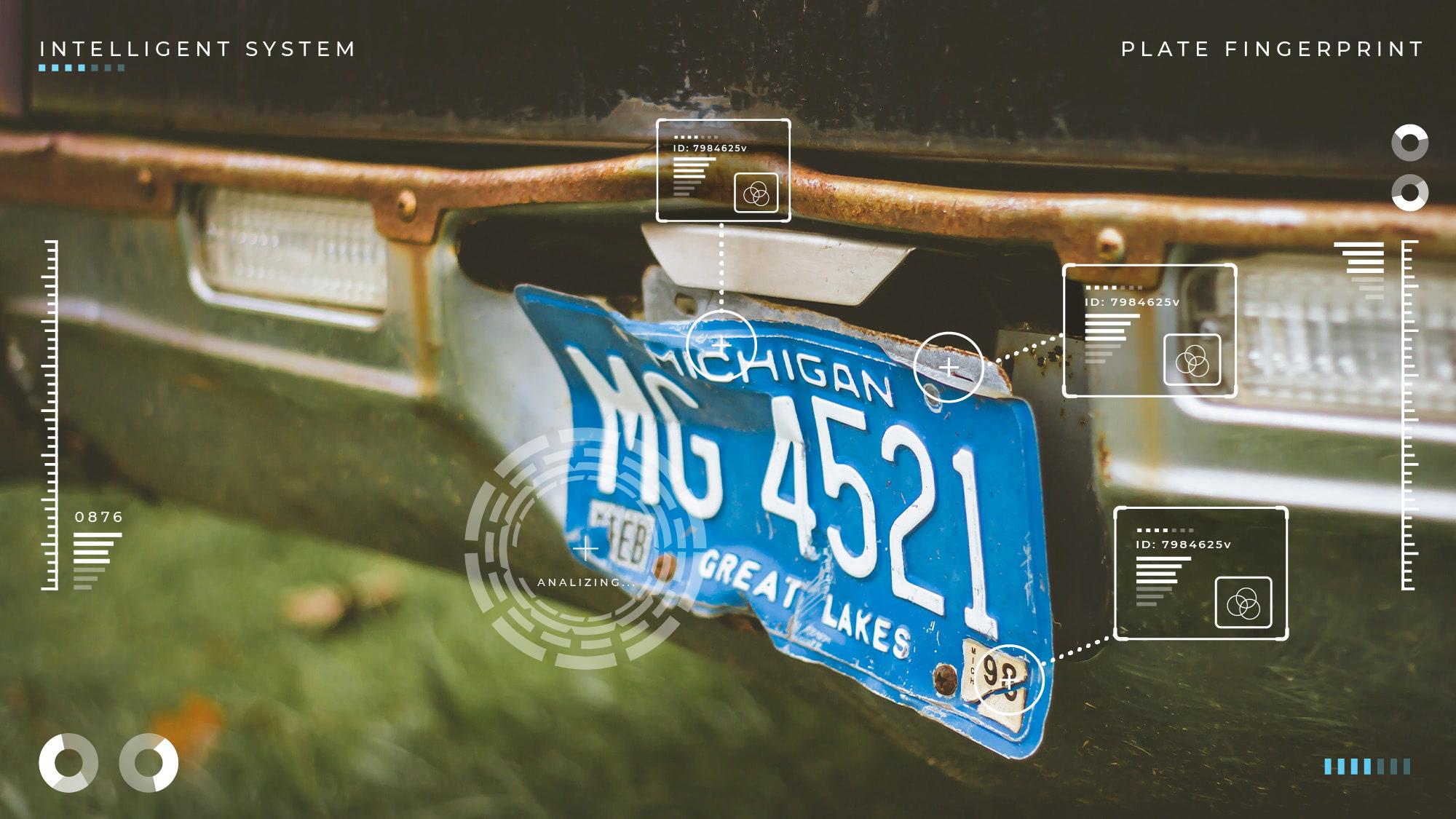
This computer vision approach is substantially superior to the traditional “just-focus-on-the-digits” approach, which would treat those little marks as noise.
This holistic approach is further reinforced by cloud-based AI. Some providers are deploying multiple OCR engines simultaneously, deliberately trained to not make the same errors. By comparing outputs and reaching consensus, these systems achieve accuracy levels previously unattainable with a single model.
This approach is particularly impactful in regions like the United States, where the constant introduction of new license plate designs, combined with multiple formats and vanity plates, creates significant variability.
Early operational studies on this technology indicate significant accuracy gains, including double-digit percentage improvements, such as over 16% in Tennessee and nearly 20% in Texas, resulting in gross accuracy levels approaching 99.6%
AI models can now identify vehicle make (brand), model, and color, adding more data layers and expanding beyond identification into a whole new universe of possibilities... without requiring any hardware or firmware changes.
This new data layer acts as a force multiplier for forensic investigation and predictive operations, starting with "partial plate" scenarios. When license plates are captured only partially due to real-world limitations (obstructions, damage, dirt, lighting, etc.), MMR helps narrow thousands of potential matches down to a handful of vehicles by filtering for specific makes, models, and color signatures. This feature is especially useful for law enforcement and security response.
MMR capabilities can be expanded by linking internal databases to manufacturer information, which is structured, continuously updated, and publicly available.
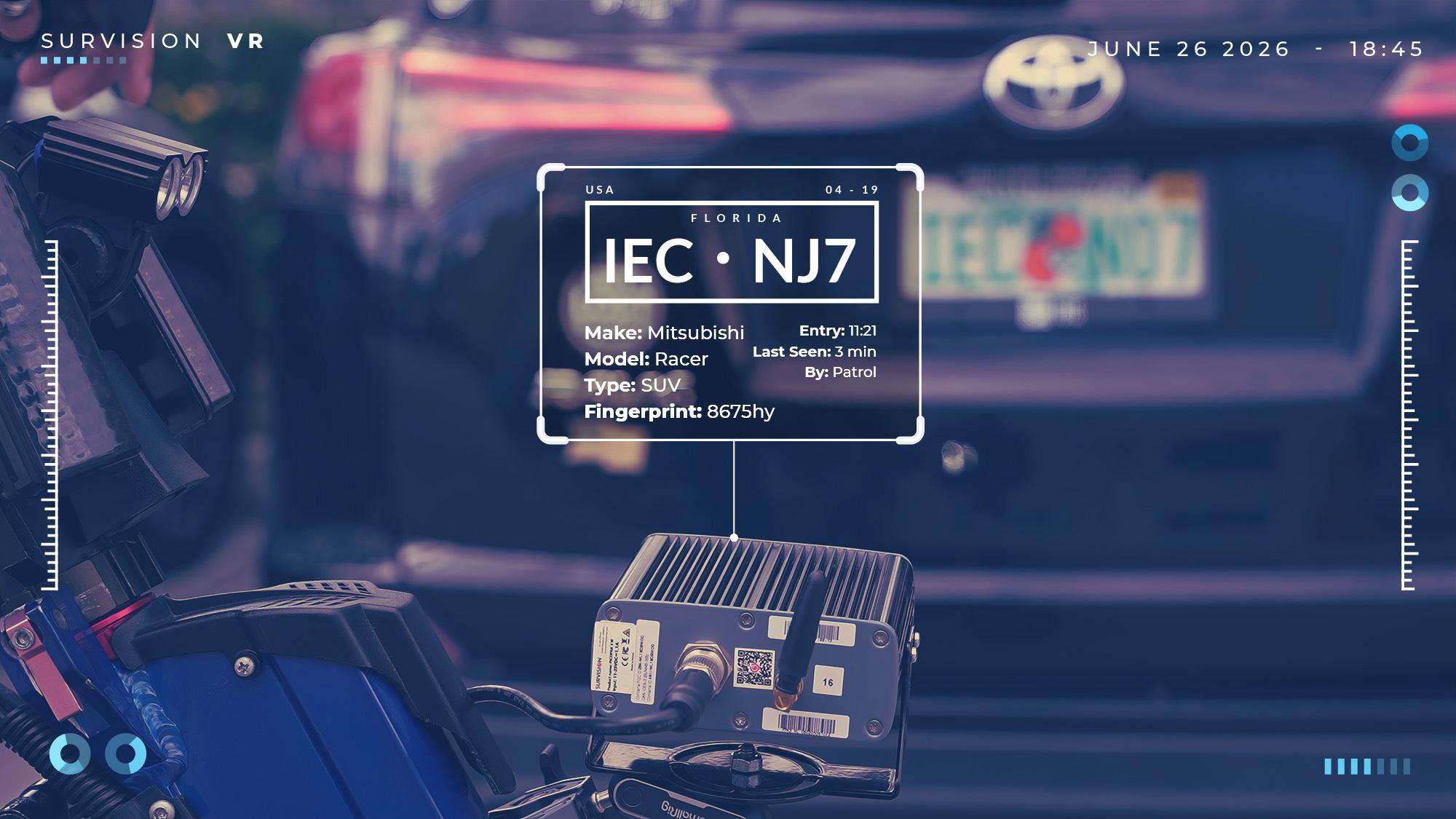
By combining these data sources, operators could gain access to a large set of additional information about vehicles, such as weight, size, age, engine type, and other specifications inherent to each model, to use them as verification signals.
MMR is also a highly attractive feature for business intelligence; it enables the creation of better consumer profiles without compromising privacy. Parking and retail operators can segment their audiences by vehicle type, enabling data-driven marketing, customer experiences, and facility optimization.
As you can see... It is more than just “more data”.
The result of this new approach is a continuously updated vehicle identity that improves over time, automatically correcting earlier reads and attaching them to a single session, making it possible to automate decisions that previously required manual review, bringing unprecedented accuracy, scalability, and trust to complex environments such as airports, multi-level parking, and enforcement-sensitive zones.
A cloud-based LPR enhancement that adds additional data layers on top of the on-edge reading to further improve accuracy and enrich vehicle insight:
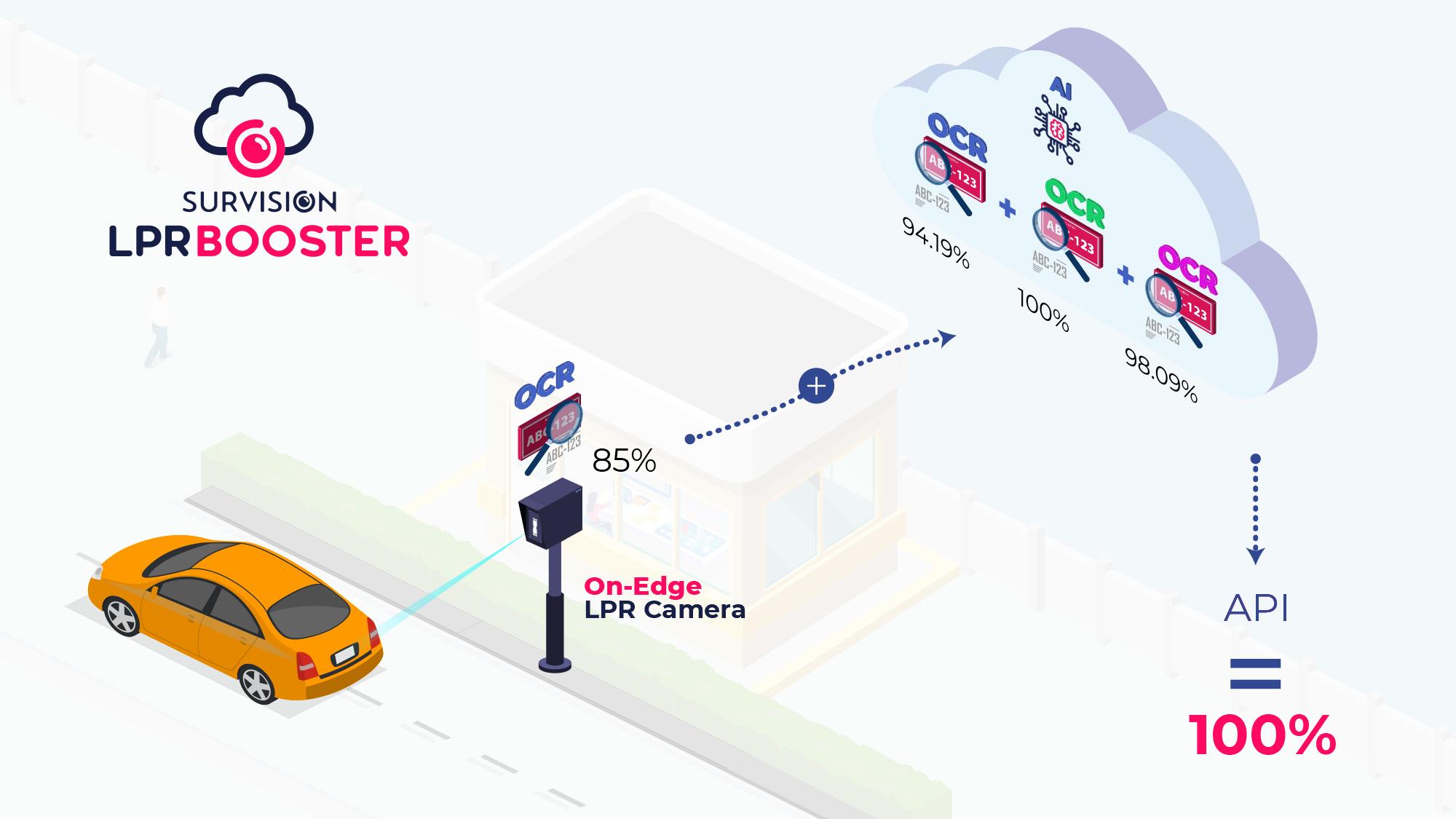
1. Mutiple OCR: Instead of relying on a single OCR, Survision Booster uses multiple, diverse AI models in the cloud. Each model processes the license plate image independently, and the system automatically selects the best result. This ensures the most accurate reading possible, even under complex or unpredictable conditions.
2. MMR: Booster also uses the captured image to run new AI-based MMR protocols that add the vehicle's make, model, and class to the reading data.
Learn More About Survision Booster
Survision’s proprietary vehicle matching engine designed to improve entrance-to-exit session continuity. It is built on a AI-powered algorithm that combine multiple vehicle signals into a single, persistent vehicle identity.
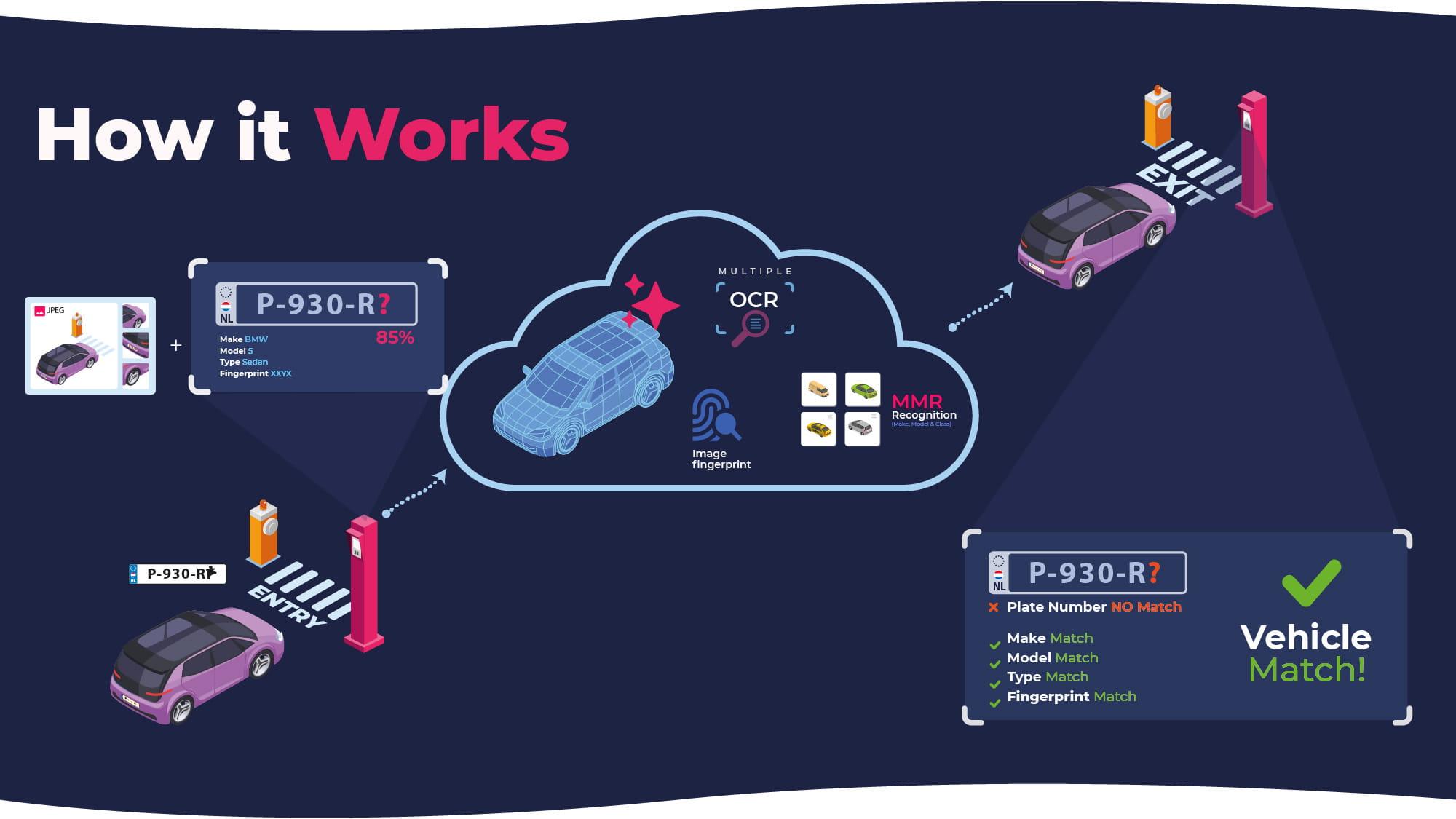
Deepmatch maintains consistent vehicle identity across lanes by combining plate intelligence with additional vehicle-level signals
This paradigm shift is taking us toward systems that communicate; when a parking management platform synchronizes with marketing analytics and security protocols, the enterprise’s capabilities multiply.
In this new landscape, Vehicle Intelligence becomes the primary engine for Business Intelligence. By granting AI deeper agency over these integrated systems, operators gain access to high-level insights and predictive suggestions that were once manual, slow, limited, and prone to error.
This evolution is not about adding fields to a database. It is about fundamentally improving a system’s ability to decode the physical world. We are moving away from isolated tools designed for specific problems, toward integrated sensory ecosystems that maximize accuracy, resilience, and profitability.
The license plate is no longer enough. The future belongs to vehicle intelligence.
High performance LPR camera for the most challenging sites such as very short distances and open angles

More affordable, smaller yet very fast and precise LPR camera, ideal for barrier or totem embedding

The world's smallest LPR camera for security and on-street parking control

Ideal for ITS and Tolling, this powerful camera works at large distances and very high speeds

Compact and affordable LPR camera with 4G connection, designed for Smart city
Despite the country or region, even Vanity Plates!
Lights, protection and connection are integrated into the LPR Cameras
LPR is performed in the LPR cameras firmware
LPR can be triggered by external device or by the license plate itself
Neural networks are used to learn from every plate read and increase performance over time
Up to 155 mph (250 km/h)
The shortest distance (from 5ft!) at the highest accurate reading speed (20ms)
You do not need more than 1 Survision LPR camera to get LPR working
Software tools for system integration or app building

Give us a call; we can help. No question is too big. We love to talk about even the smallest details when it comes to LPR. We've got answers for you. Our expert team is a great resource for information, just a phone call away.