
Parking used to be about "counting cars and making them pay". Today it's more about understanding them at a deeper level, and that changes everything about where the source of such an intelligent feature lives.
Take something as simple as detecting an EV to apply a preferential rate or give exclusive access to EV charging curbs. Thanks to AI technology, now, your LPR camera doesn't just read a plate anymore; it can recognize much more, from particular characteristics (fingerprinting) to tipified ones such as vehicle type, color, make, and model. However, new vehicle models are added on a weekly basis: new EVs, SUVs, hybrids, etc. This creates the need to constantly update AI datasets, at fleet scale, across every site, every day.
Try doing that on-premise, camera by camera, parking by parking. It's utterly exhausting... and it doesn't scale.
You can't centralize, retrain, and redistribute AI models across thousands of cameras without a cloud to do the heavy lifting. And once the data is centralized, the real value shows up: it's not just algorithmic dashboards that tell you what happened, but acting agentic systems that adjust pricing, flag anomalies, reroute flows, or cut costs before a human even opens a screen.
But "cloud-first" doesn't mean "send everything to the cloud" Streaming raw video from thousands of cameras would choke bandwidth, overload servers, and burn energy for no good reason. The smart move is to do the heavy extraction at the edge (LPR read directly in the camera) and send only a lightweight, already-optimized JPEG upstream for the next layer of analysis: make, model, color, EV detection, etc.
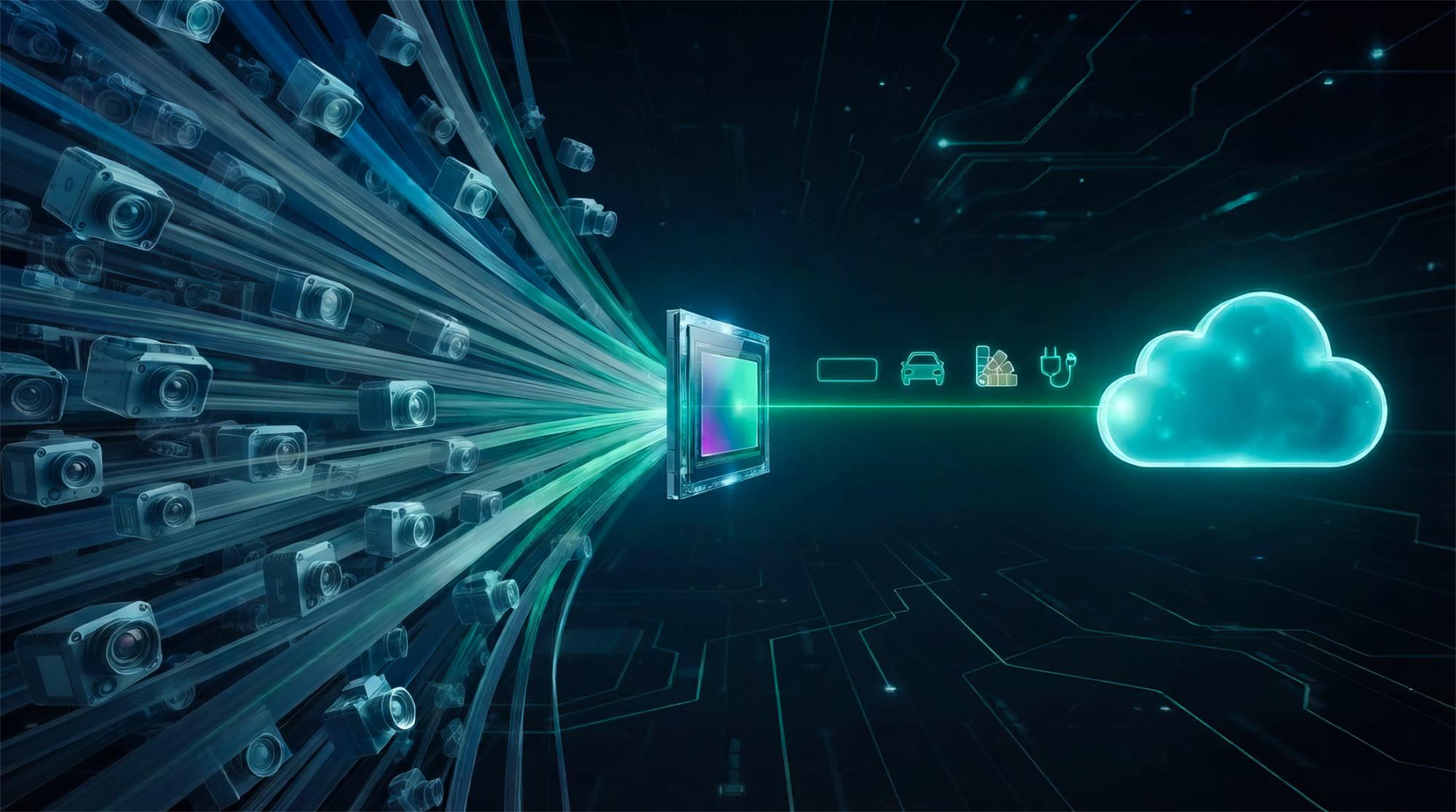
Light data in, heavy intelligence out. That's what makes cloud processing sustainable instead of wasteful.
This is the part most people skip: Yes, scaling AI features globally requires moving out of local hardware and into the cloud, yet relying on foreign hyperscalers introduces severe legal exposure by severing data from its local jurisdiction. If data collected in Geneva is processed by a server in Virginia, under a legal framework written for a different country, you have not solved a technical problem. You have created a jurisdictional one!
Any robust cloud-based solution requires a cloud infrastructure that processes intelligence at scale while keeping data governed strictly by the laws of the territory where it was captured.
Sovereignty is not a buzzword here. It is the difference between your parking data being governed by the laws of the place where the car was parked or by the laws of wherever a hyperscaler happens to keep a data center and a legal department.
We at Survision build our cameras where they're used. We think cloud infrastructure deserves the same logic: local intelligence. Local law. No hiatus between where data is born and where it's put to work. All our cloud-based solutions work over a proprietary, optimized cloud infrastructure, designed from scratch, focused on vehicle recognition best practices.
Contact Us to share your ideas and concerns about cloud-based parking solutions.
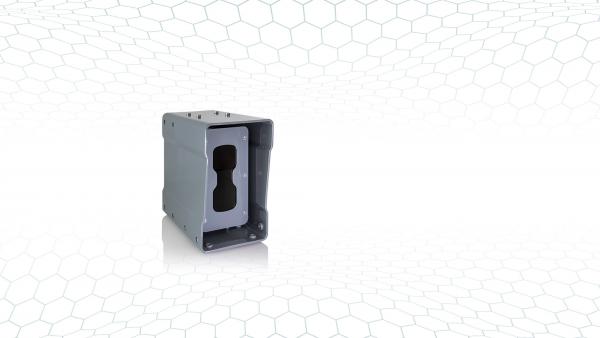
High performance LPR camera for the most challenging sites such as very short distances and open angles

More affordable, smaller yet very fast and precise LPR camera, ideal for barrier or totem embedding
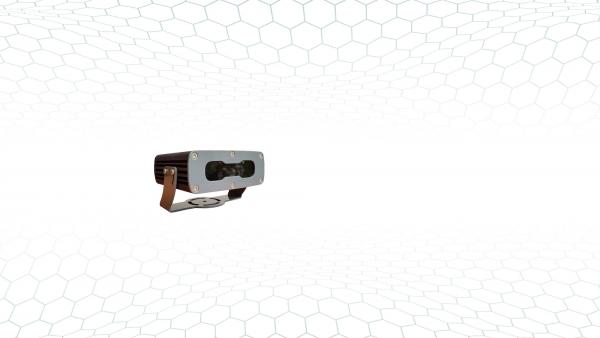
The world's smallest LPR camera for security and on-street parking control

Ideal for ITS and Tolling, this powerful camera works at large distances and very high speeds

Compact and affordable LPR camera with 4G connection, designed for Smart city
Despite the country or region, even Vanity Plates!
Lights, protection and connection are integrated into the LPR Cameras
LPR is performed in the LPR cameras firmware
LPR can be triggered by external device or by the license plate itself
Neural networks are used to learn from every plate read and increase performance over time
Up to 155 mph (250 km/h)
The shortest distance (from 5ft!) at the highest accurate reading speed (20ms)
You do not need more than 1 Survision LPR camera to get LPR working
Software tools for system integration or app building

Give us a call; we can help. No question is too big. We love to talk about even the smallest details when it comes to LPR. We've got answers for you. Our expert team is a great resource for information, just a phone call away.