
The use of retractable bollards has become essential for regulating urban traffic in pedestrian zones, city centers, private parking lots, and sensitive sites. Today, these systems are evolving to make access management smarter than ever.
When combined with a LPR / ANPR (License Plate Recognition camera / Automatic Number Plate Recognition), retractable bollards become a fully autonomous, seamless, and contactless access control system.
In this article, we explain how this combination works, the use cases it covers, and why it is becoming the standard solution for Smart Cities.
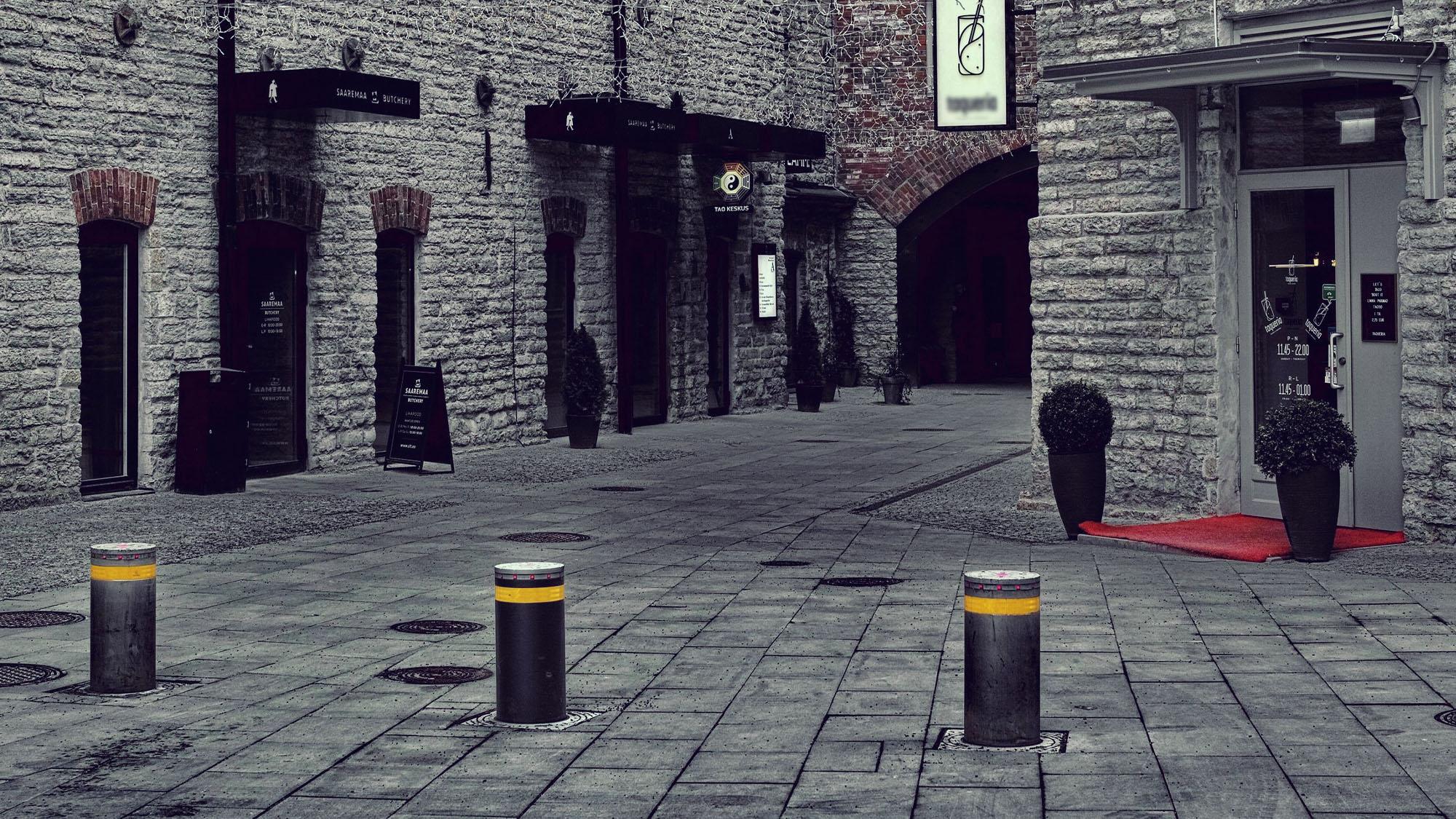
A retractable bollard is a metal cylinder embedded into the roadway. It can automatically or manually rise and lower depending on operational requirements. Its purpose is to restrict or grant vehicle access to specific areas.
The increasing deployment of retractable bollards in these locations is primarily driven by safety concerns. By limiting access to authorized vehicles only, they help reduce intrusions, malicious acts, and accidents involving pedestrians and vehicles.
There is also a growing environmental benefit. By encouraging pedestrianization in urban centers and reducing vehicle traffic in certain areas, retractable bollards contribute to lower pollution levels and reduced noise in cities. Some solutions go even further with solar-powered autonomous models, further minimizing their environmental impact.
Many tourist destinations now use these systems to protect historic city centers and preserve residents' quality of life.
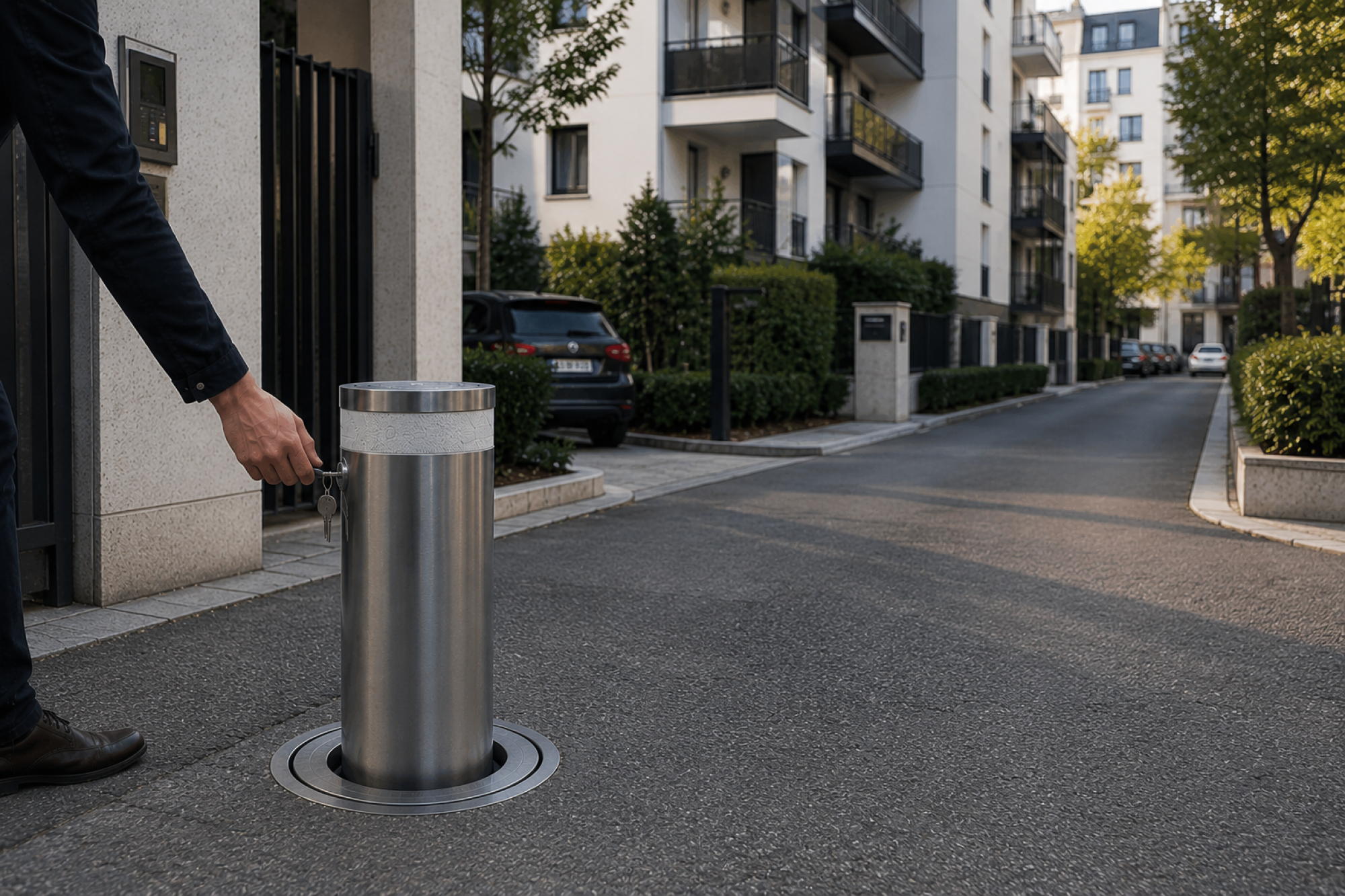
AI-generated illustration
Depending on the intended use and traffic frequency, retractable bollards can be divided into three main categories:
Manual: Raised and lowered using a key or lever, manual retractable bollards are a simple and cost-effective solution. They are suitable for low-traffic areas such as small parking lots, private properties, or occasional access points. The main drawback of this type of bollard is its reliance on human intervention for operation.
Semi-Automatic: These feature a hybrid operating mechanism. Unlocking is performed manually, while raising or lowering is assisted by a gas strut or hydraulic mechanism. These are less restrictive than fully manual bollards, offering greater user convenience while still requiring human presence in every operation. This type of bollard is particularly suited for residential properties, small parking facilities, and areas with moderate traffic frequency.
Automatic Retractable: The most advanced solution among the three categories. Fully motorized and remotely controlled through badges, intercom systems, or vehicle access control systems. These ensure smooth vehicle access, centralized entry and exit management, and a high level of security. These bollards are indispensable in high-traffic environments such as city centers, airports, public parking facilities, government sites, and pedestrian zones
On their own, retractable bollards require human intervention or the use of an access code or badge to operate. However, when combined with LPR/ANPR technology, they become a fully automated access control system, based on vehicle license plate recognition. This combination is the most efficient solution available.
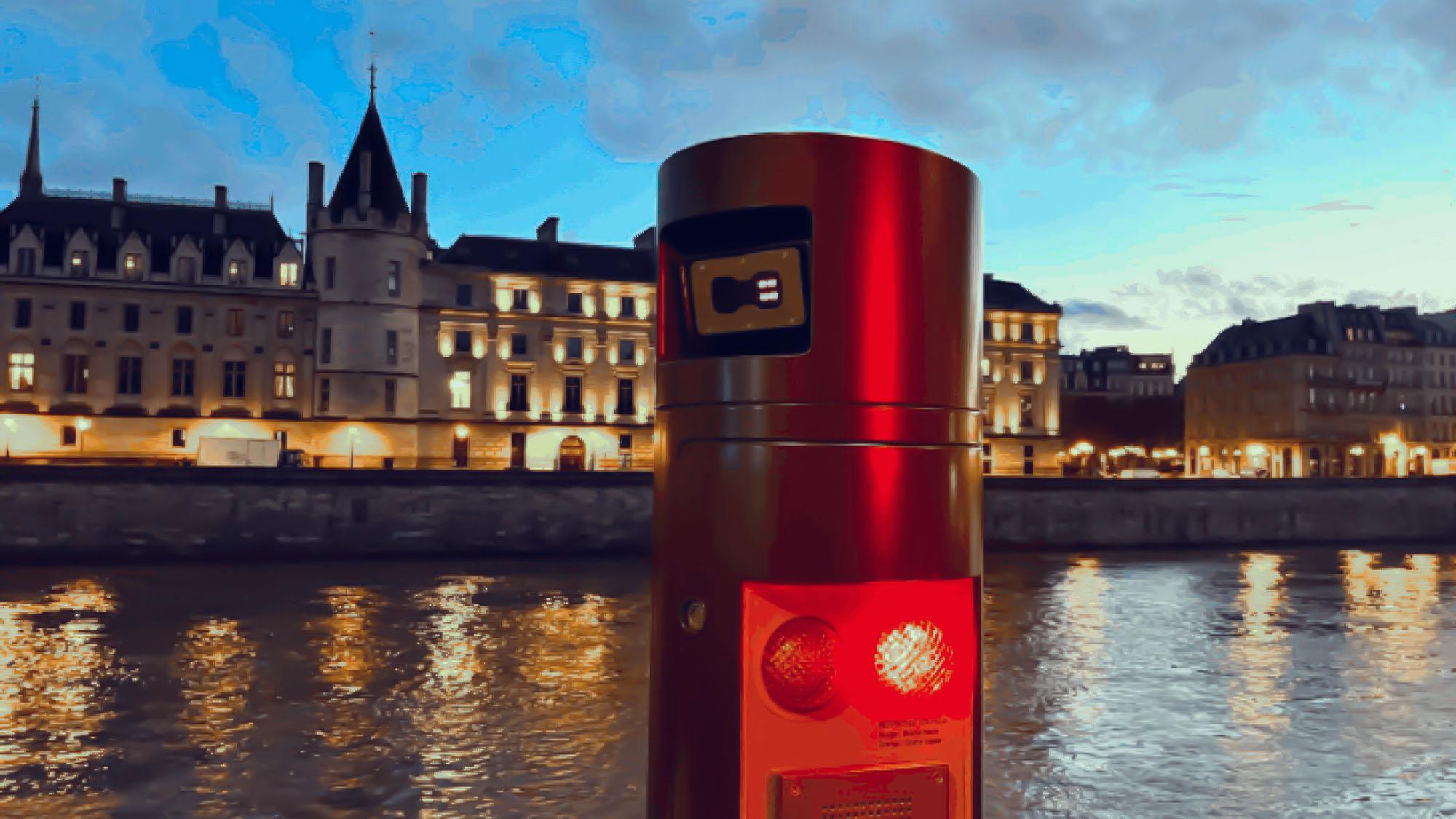
Bollard equipped with a Survision ANPR camera at Seine River in Paris
Integrating an LPR/ANPR camera transforms a retractable bollard into an intelligent access control system on its own. It eliminates the need for badges and access codes, which can be lost, shared, or stolen, while removing the need for user intervention. The system operates autonomously and continuously, 24 hours a day, 7 days a week.
For retractable bollard manufacturers, integrating an ANPR solution represents significant added value. It enhances the product offering, helps meet public procurement requirements, and positions the system within the premium segment of automated access control.
For municipalities and site operators, this technology provides greater convenience for authorized users while significantly strengthening security.
How Does It Work?
The entire process takes only a few seconds, without prolonged stops, physical contact, or friction.
| Criteria | Retractable Bollard Without ANPR | Retractable Bollard With ANPR |
|---|---|---|
| Access Method | Badge, code, key, or remote control required | Automatic license plate recognition |
| Security | Risk of lost, forgotten, or shared credentials | Unique license plate identification with strictly controlled access |
| Traffic Flow | Vehicle often needs to stop, creating potential queues | Immediate access and smooth traffic flow |
| Access Logging | History available through badges or access logs | Automatic centralized real-time logging |
| Authorization Management | Manual or local access management | Remote management through a centralized platform |
| User Experience | User action required | Fully contactless and intervention-free access |
Along the Seine riverbanks in Paris, retractable bollards equipped with Survision ANPR cameras regulate vehicle access.
This system automatically identifies authorized vehicles entering an area that is heavily frequented by pedestrians, ensuring both safety and operational efficiency.
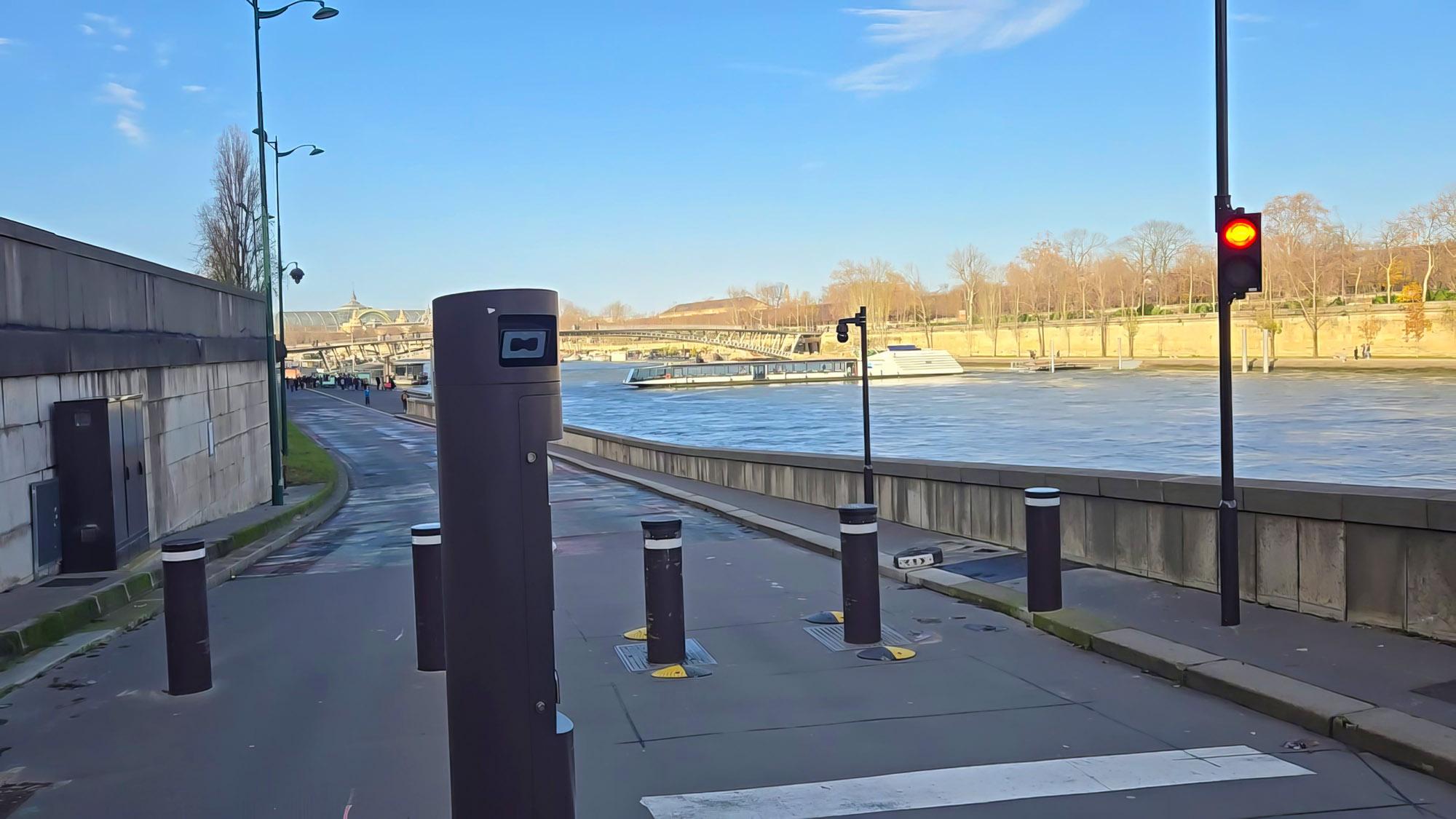
Automatic retractable bollard access control using license plate recognition along the Seine riverbanks (Paris, France).
Choosing the combination of retractable bollards and ANPR cameras means opting for smoother, smarter, and fully automated vehicle access control.
Today, this technology represents the most advanced and efficient standard available on the market.
Are you installing retractable bollards or managing an access control project? Discover our PlateAccess solution or contact one of our experts: sales@survisiongroup.com
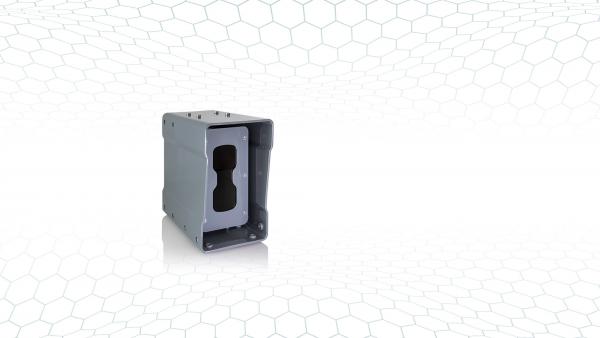
High performance LPR camera for the most challenging sites such as very short distances and open angles

More affordable, smaller yet very fast and precise LPR camera, ideal for barrier or totem embedding

The world's smallest LPR camera for security and on-street parking control

Ideal for ITS and Tolling, this powerful camera works at large distances and very high speeds

Compact and affordable LPR camera with 4G connection, designed for Smart city
Despite the country or region, even Vanity Plates!
Lights, protection and connection are integrated into the LPR Cameras
LPR is performed in the LPR cameras firmware
LPR can be triggered by external device or by the license plate itself
Neural networks are used to learn from every plate read and increase performance over time
Up to 155 mph (250 km/h)
The shortest distance (from 5ft!) at the highest accurate reading speed (20ms)
You do not need more than 1 Survision LPR camera to get LPR working
Software tools for system integration or app building

Give us a call; we can help. No question is too big. We love to talk about even the smallest details when it comes to LPR. We've got answers for you. Our expert team is a great resource for information, just a phone call away.