
By: Jacques Jouannais
Critical infrastructures such as airports, power plants, ports, highways, military sites, logistics platforms, data centers, and petrochemical facilities are now facing a dual challenge:
Ensuring the physical security of sites while protecting the digital infrastructures that operate them.
In this context, Automatic Number Plate Recognition (ANPR) / License Plate Recognition (LPR) systems play a central role. They enable access control, vehicle tracking, suspicious vehicle detection, and the automation of security operations...
But one question has become unavoidable:
Are the cameras deployed on these sites themselves secure?
A connected camera is no longer just a video sensor. It is an "intelligent" network device, often connected directly to the site’s critical information system. A vulnerability in a camera can therefore become an entry point into the entire infrastructure.
This is precisely why operators of critical infrastructures in Europe and North America are now reassessing their technology choices, particularly in light of digital sovereignty, cybersecurity, and regulatory compliance challenges.
Sites of vital importance and critical infrastructure have become major targets for state-sponsored cyberattacks, sabotage, physical intrusions, industrial espionage, and hybrid attacks, combining cyber and physical operations.
Airports, highway networks, energy infrastructures, and government facilities rely heavily on intelligent video surveillance and automated access control systems.
In many cases, ANPR/LPR cameras represent the first line of defense:
LPR cameras automatically give or deny access to vehicles based on an authorization record in the database. If this fails (through sensor spoofing or database corruption), the system grants entry to unauthorized entities, effectively bypassing the first physical security checkpoint and thus compromising the whole perimeter. Since this happens in milliseconds, failure here can result in creating a "blind spot" where blacklisted vehicles or threats could gain access, rendering the alert infrastructure useless and denying security teams the opportunity for proactive intervention.
The system relies on the seamless handshake between the camera's recognition signal and the mechanical gate controller. If this integration fails due to cyber-tampering or latency issues, it can cause "fail-open" state, leaving the site exposed to unauthorized traffic, or a "fail-closed" state, which paralyzes logistics and creates emergency egress risks.
Operators trust in the integrity of historical metadata logs to distinguish between routine logistical movements and irregular patterns. If the camera data is manipulated or compromised, the system could provide a false sense of normalcy, allowing an adversary to conduct long-term site reconnaissance or move undetected during non-operational hours by masking their activity within spoofed data.
Operators trust the camera data to feed other systems, such as alarms or VMS. If a compromised camera feeds false data into the broader network, it creates a ripple effect of disinformation; the entire security ecosystem may become unresponsive to genuine threats while diverting resources to respond to "ghost" events or false negatives.
Therefore, a compromised camera can become:
This is why the cybersecurity of the equipment itself has become just as important as its recognition performance.
Companies operating in countries without strong institutional counterbalances such as an independent press, political opposition, or judicial independence may operate under legal obligations requiring cooperation with state authorities.
China is frequently cited as an example, particularly with the National Intelligence Law of the People’s Republic of China enacted in 2017. This law requires any organization or citizen to “support, assist, and cooperate with national intelligence work in accordance with the law.”
Chinese companies, which are among the global leaders in video, networking, and IP equipment, may therefore be subject to mandatory cooperation with Chinese intelligence services, including information disclosure requests and other confidentiality obligations regarding such cooperation.
As a result, equipment deployed within Western critical infrastructures could potentially be subject to extraterritorial obligations that conflict with European or North American cybersecurity requirements.
For critical site operators, the risk is no longer purely technical; it has become geopolitical.

The United States was among the first countries to implement strong measures. The National Defense Authorization Act (NDAA) restricts the use of several Chinese manufacturers within U.S. federal and government infrastructures.
This regulation notably concerns:
The objective is clear: reduce technological dependency risks and limit potential vulnerabilities in sensitive systems.
Today, many North American integrators are actively seeking NDAA-compliant alternatives for Airports, Transportation, energy facilities, smart cities, and government infrastructure.
In this context, European solutions are gaining significant traction.
In Europe, the NIS2 Directive represents a major regulatory shift. This legislation imposes stricter cybersecurity obligations on essential and important operations, including cyber risk management, supply chain control, connected equipment security, and security design policies. In this matter, video surveillance systems and ANPR/LPR technologies are directly affected.
Operators must now ask concrete questions:
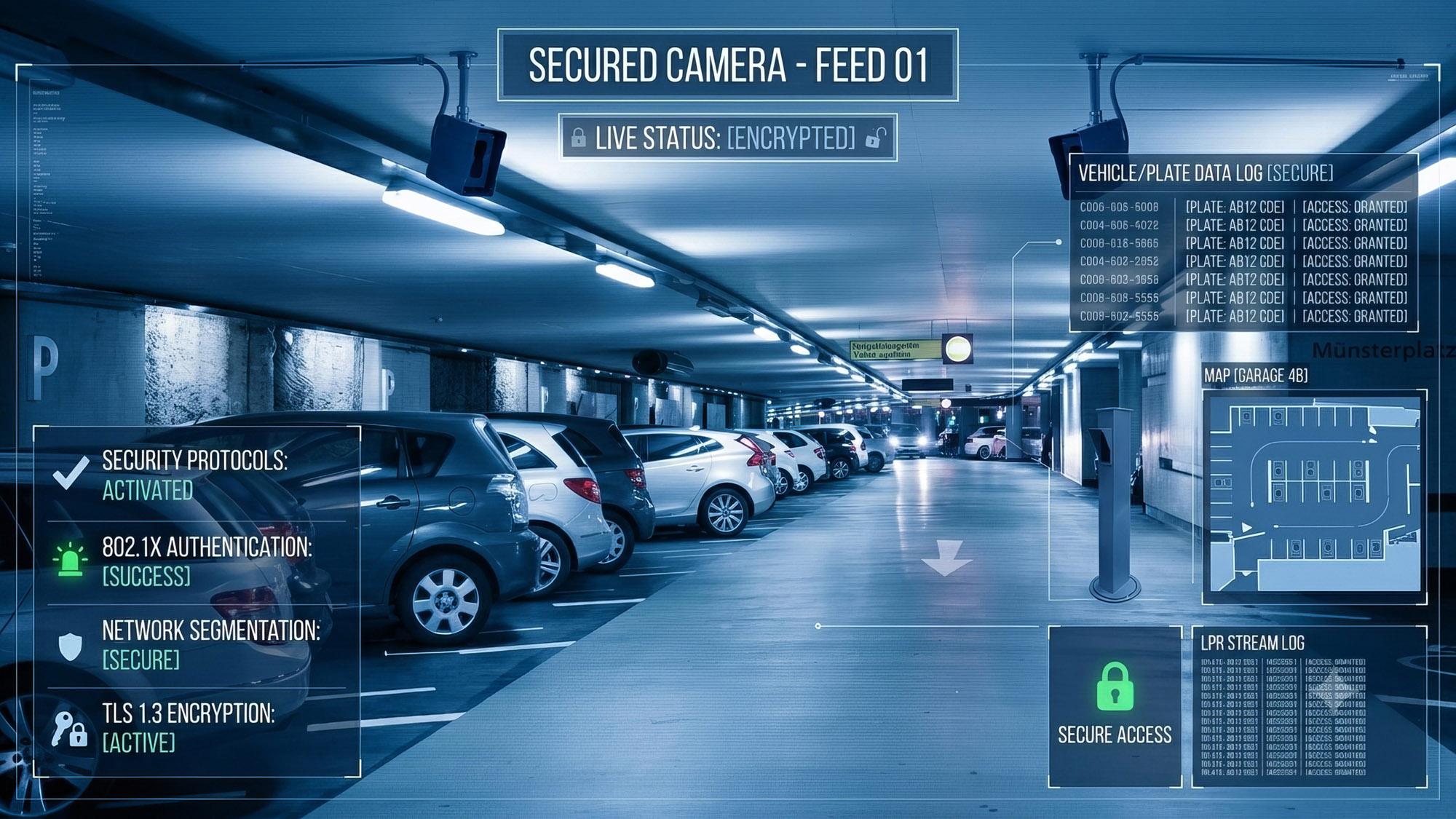
Cost alone is no longer a sufficient selection criterion.
On a critical site, a camera can no longer be considered a simple IP peripheral. It must be integrated into a secure network architecture.
Modern ANPR / LPR cameras like Survision's must now support advanced cybersecurity standards such as:
This device network authentication protocol enables authentication of every device before it can access the network. This means that an unknown or compromised camera cannot simply be plugged into the network and start communicating.
This mechanism is now essential in:
SURVISION cameras already integrate the 802.1X Protocol.
The 802.1Q protocol enables secure VLAN-based network segmentation that allows:.
A camera properly integrated into a secure VLAN significantly reduces intrusion propagation risks.
SURVISION cameras also support the 802.1Q standard.
Network communications must be protected against interception, spoofing, and man-in-the-middle attacks. Therefore, the use of secure protocols such as TLS 1.2 and TLS 1.3 has become mandatory in critical environments.
SURVISION equipment supports TLS 1.2 / TLS 1.3.
A camera deployed on a critical site must also provide:
These functionalities are now required in most cybersecurity audits related to critical infrastructures.
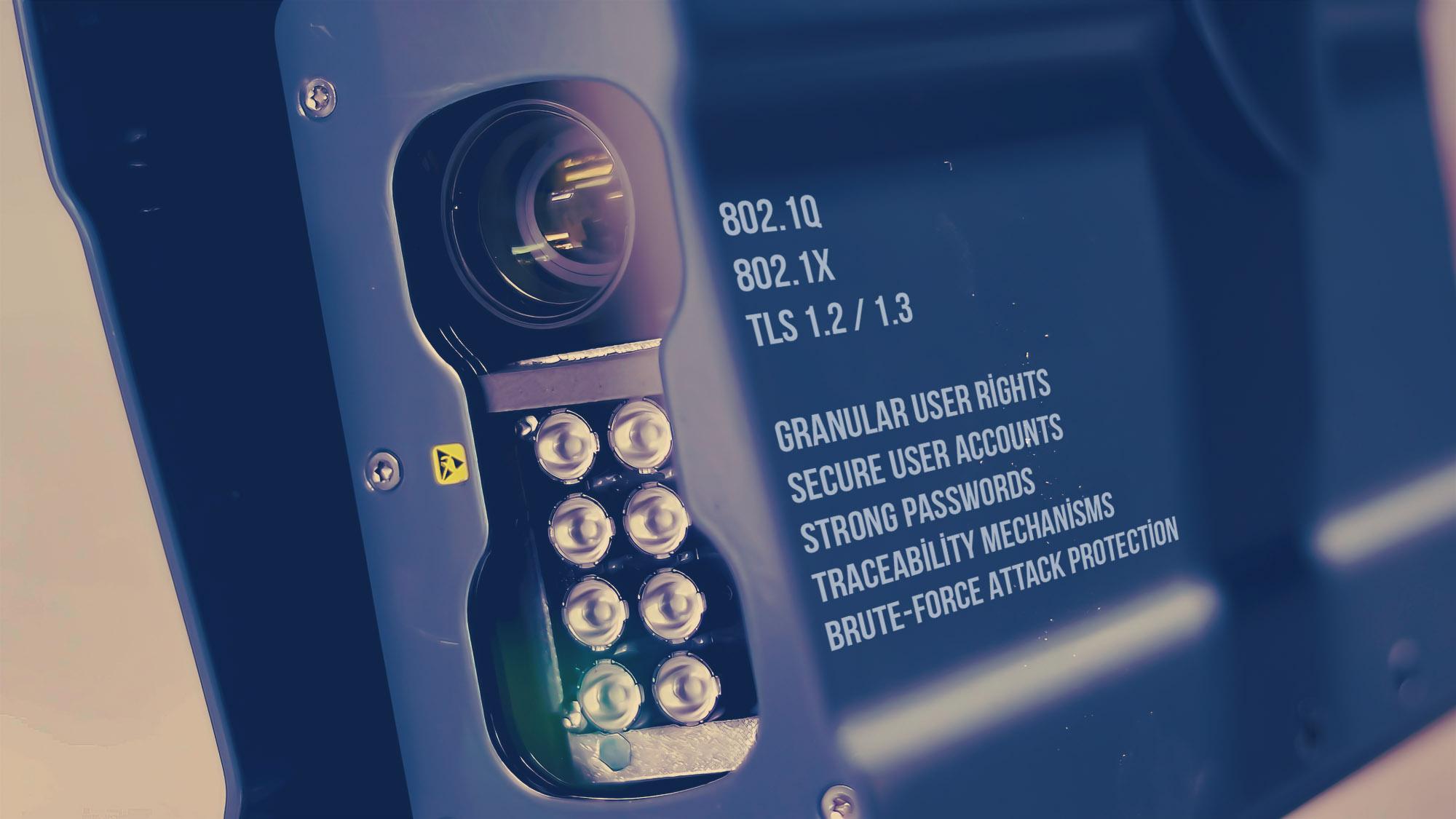
SURVISION implements all these cybersecurity best practices.
Beyond security protocols, industrial sovereignty has become a major concern. Operators of critical infrastructures now seek to avoid risks related to geopolitical tensions by controlling their supply chains, reducing extra-European dependencies, ensuring long-term equipment availability, and securing software update processes.
SURVISION LPR/ANPR cameras are designed, developed, and manufactured in the European Union and the United States, with components compliant with NDAA requirements.
For many years, ANPR projects were primarily evaluated based on recognition performance, speed, cost, and optical quality.
While these criteria remain essential, critical infrastructure operators now also evaluate solutions on this new layer of criteria:
This shift is profound.
The video surveillance market is undergoing a major transformation. For critical operations, vehicle control solution choices (starting with the cameras) can no longer be based solely on price, resolution, or marketing performance claims.
Between NDAA requirements in North America and NIS2 obligations in Europe, operators are seeking solutions that are secure by design, compliant with modern cybersecurity standards, industrially controlled, and independent from foreign state-related risks. In this context, next-generation European solutions are becoming increasingly strategic.
Today, protecting critical infrastructure also means securing the cameras that monitor it.
ANPR and LPR systems are often connected directly to access control, security management, and operational networks. If a camera is compromised, it can become an entry point for cyberattacks, data theft, or unauthorized access. As a result, cybersecurity is now just as important as license plate recognition performance.
Modern ANPR cameras deployed in critical infrastructure environments should support:
These features help protect networks and support compliance with cybersecurity regulations.
The U.S. National Defense Authorization Act (NDAA) restricts the use of certain foreign-manufactured surveillance and telecommunications equipment in federal government environments. Many airports, transportation agencies, utilities, and government organizations now prioritize NDAA-compliant cameras to reduce cybersecurity and supply chain risks.
The European Union's NIS2 Directive requires essential and important entities to strengthen cybersecurity practices, including supply chain security and the protection of connected devices. This means operators must carefully evaluate the security, origin, and management of ANPR cameras used within critical infrastructure.
Manufacturing origin has become a key consideration for critical infrastructure operators. Organizations increasingly assess where cameras are designed and produced, who controls firmware development, and whether suppliers could be subject to foreign government influence. These factors can directly impact cybersecurity, compliance, and long-term risk management.
Beyond recognition accuracy and cost, operators should evaluate:
A secure ANPR camera should contribute to both physical security and cyber resilience.
High performance LPR camera for the most challenging sites such as very short distances and open angles

More affordable, smaller yet very fast and precise LPR camera, ideal for barrier or totem embedding

The world's smallest LPR camera for security and on-street parking control

Ideal for ITS and Tolling, this powerful camera works at large distances and very high speeds

Compact and affordable LPR camera with 4G connection, designed for Smart city
Despite the country or region, even Vanity Plates!
Lights, protection and connection are integrated into the LPR Cameras
LPR is performed in the LPR cameras firmware
LPR can be triggered by external device or by the license plate itself
Neural networks are used to learn from every plate read and increase performance over time
Up to 155 mph (250 km/h)
The shortest distance (from 5ft!) at the highest accurate reading speed (20ms)
You do not need more than 1 Survision LPR camera to get LPR working
Software tools for system integration or app building

Give us a call; we can help. No question is too big. We love to talk about even the smallest details when it comes to LPR. We've got answers for you. Our expert team is a great resource for information, just a phone call away.